
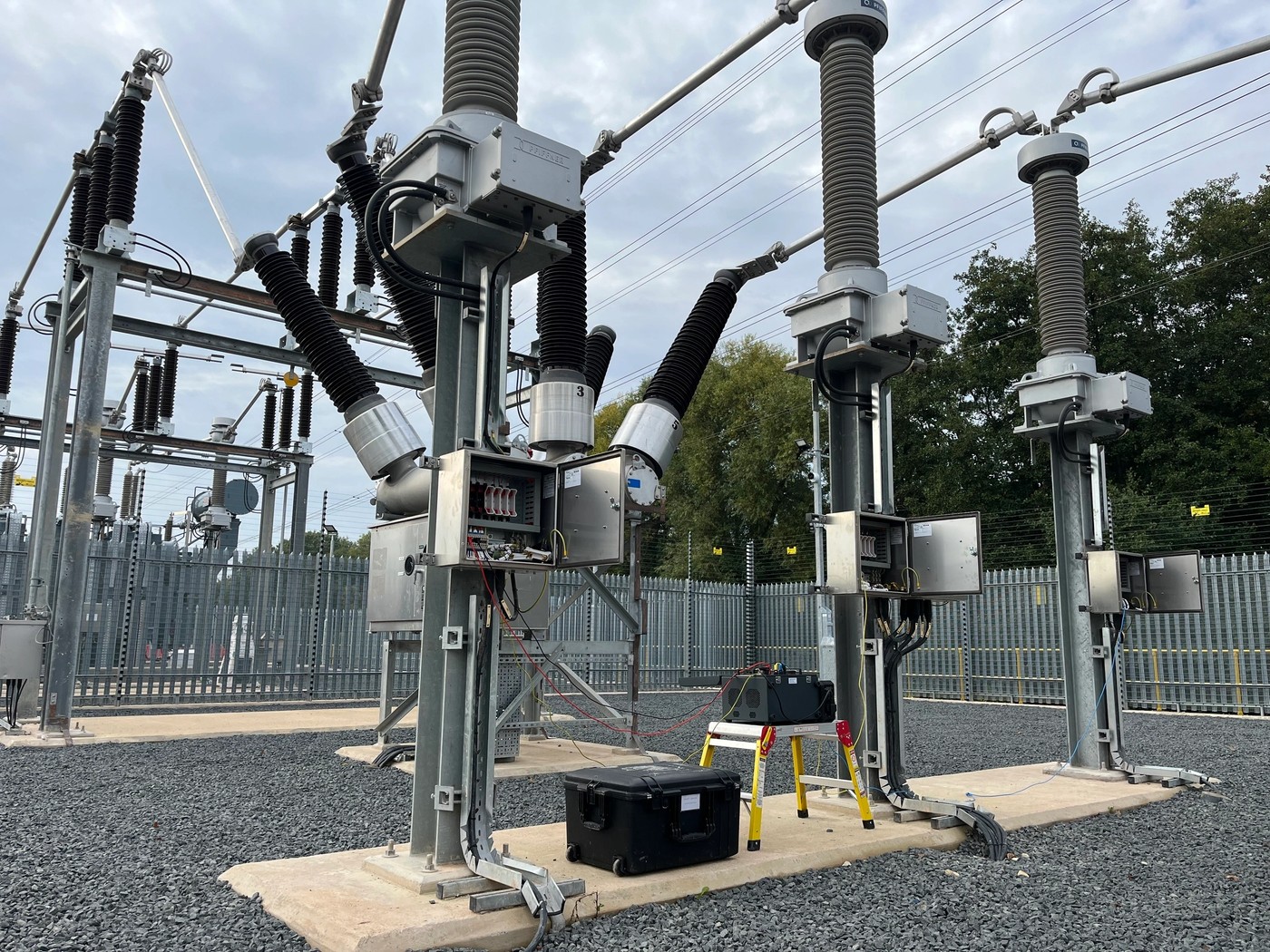
Expertise
HV Commissioning
Structured management of commissioning activities so high voltage systems are installed, tested and energised safely, on programme and in full compliance with project specification.
- Voltage range
- 11kV · 33kV · 66kV · 132kV
- Coverage
- UK-wide
- Delivered by
- HV commissioning engineers & SAPs
What HV commissioning actually involves
High voltage commissioning is the controlled process that proves an HV installation does exactly what the design says it will do — before anybody depends on it. It starts long before test equipment arrives on site. We review single line diagrams, protection settings schedules, relay configuration files, cable schedules and switchgear type test evidence, then translate that into an Inspection and Test Plan that the client, principal contractor and DNO can all sign against.
On site the sequence is deliberate: static checks and insulation verification, then secondary injection to prove every protection element and its trip path, then primary injection where CT ratio, polarity and burden need to be proven end to end. Interlocks, trip circuit supervision, VT supplies, DC systems and SCADA signals are all confirmed as part of the same package rather than left to a later visit.
Why an independent commissioning engineer matters
When the installer also signs off the testing, the errors that matter most — a transposed CT, a grading margin that only fails at minimum fault level, a trip link left out — tend to survive to energisation. An independent commissioning engineer breaks that loop. We test to the design, question the design when the test result disagrees with it, and record both.
That independence is also what makes handover documentation defensible. Insurers, DNO connections teams and asset owners increasingly ask for evidence of who tested what, with which calibrated equipment, against which revision of the settings schedule. Our packs answer that in one place.
Typical scope on a UK scheme
A representative package for a new 11kV/33kV substation includes ring main unit and switchboard commissioning, transformer pre-energisation testing, protection relay configuration and verification, VLF cable testing, earthing and bonding verification, DC and tripping supply checks, SCADA/telemetry point-to-point, then a phased energisation and load transfer under SAP control.
- New-build substations and switchrooms
- Substation extensions and bay additions on live sites
- Retrofit protection upgrades and relay replacements
- Renewable grid connections and battery storage export schemes
- Data centre HV infrastructure and resilience proving
HV Commissioning — questions we get asked
- What voltage range do you commission?
- From 11kV package substations up to 132kV bay commissioning, including 33kV and 66kV distribution and private networks.
- Do you provide the Inspection and Test Plan?
- Yes. We produce project-specific ITPs from the approved design and settings schedule and issue them for client and DNO review before mobilising to site.
- Can you commission on a live site?
- Yes. Work on live HV sites is carried out under an agreed switching programme with senior authorised person control, permits and safety documentation appropriate to the client's HV safety rules.
Related capability
Talk to us about hv commissioning
Tell us the voltage range, scope and programme dates. A commissioning engineer will come back to you — not a call centre.