Senior Authorised Person (SAP) provision: what it means and when you need one
A Senior Authorised Person controls the high voltage system, issues safety documents and takes personal responsibility for the safety of others working on it. This is what SAP provision covers, when a project needs it, and what to check before you appoint one.
Chief Executive Officer, High Voltage Commissioning Ltd
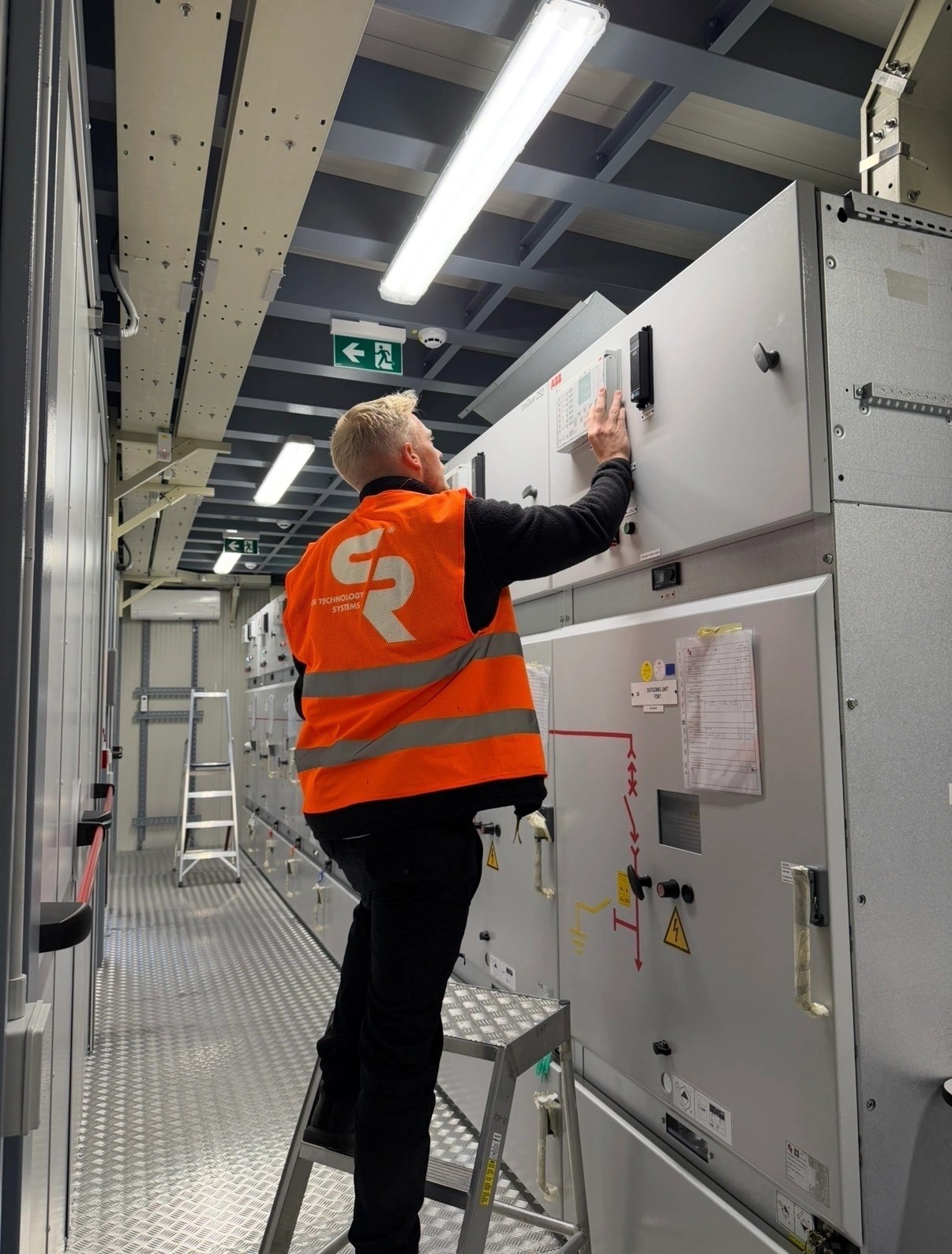
Of everything we provide, SAP provision is the service clients understand least and need most.
A Senior Authorised Person is an individual appointed in writing, under a specific set of safety rules, to control a defined high voltage system. That appointment carries personal responsibility. When I hold a SAP appointment on a site, I am the person deciding what is switched, what is earthed, and who is allowed to touch it — and I am personally accountable for the safety of every person working under a document I issue.
What a SAP actually does
- Plans and executes switching operations on the HV system
- Establishes points of isolation and applies safety earths
- Issues and cancels safety documents: permits to work, sanctions for test, limitations of access
- Briefs and controls competent persons working under those documents
- Maintains the switching log and the system state record
- Determines whether a system is safe to hand back and re-energise
The appointment is not transferable and it is not generic. It is specific to a set of safety rules — a DNO's rules, a client's rules, an ICP's rules — and often to named apparatus.
When you need SAP provision
You need a SAP the moment high voltage apparatus on your site needs operating, isolating or working on and you do not have an appointed and competent person of your own. In practice that means:
- New connections during construction, before the client's own operational cover exists
- Commissioning, where a sanction for test is required to test on isolated apparatus
- Planned maintenance shutdowns
- Fault response out of hours
- Private HV networks — industrial sites, campuses, data centres, farms with embedded generation — where the owner has HV assets but no HV-competent staff
Owning HV apparatus without an appointed person is a common and serious gap. Duty holders under the Electricity at Work Regulations 1989 cannot delegate the duty away by ignoring it.
Competence is demonstrated, not claimed
Before you accept anyone as your SAP, ask for:
- The safety rules they are appointed under, and the voltage limit of the appointment
- Evidence of current appointment and when it was last reviewed
- Operational experience on your class of apparatus — 11kV RMU experience is not 132kV bay experience
- Medical and refresher currency
- Their professional indemnity position
I would also ask a practical question: walk me through how you would isolate and earth this specific feeder. The answer, and how fast it comes, tells you everything.
The commercial argument
Clients often view SAP provision as an overhead. It is cheaper than the alternative. An unplanned outage handled by someone unfamiliar with the system takes longer, risks damage, and occasionally injures people. A retained SAP arrangement means whoever attends already knows your single line diagram, your switching constraints and your permit regime.
We hold SAP appointments across DNO and private safety rules and we provide them both as standalone retained cover and as part of a commissioning or maintenance package.
— Stuart Banner
Need this done on your network?
HV commissioning, SAP provision, protection studies and maintenance across the UK.